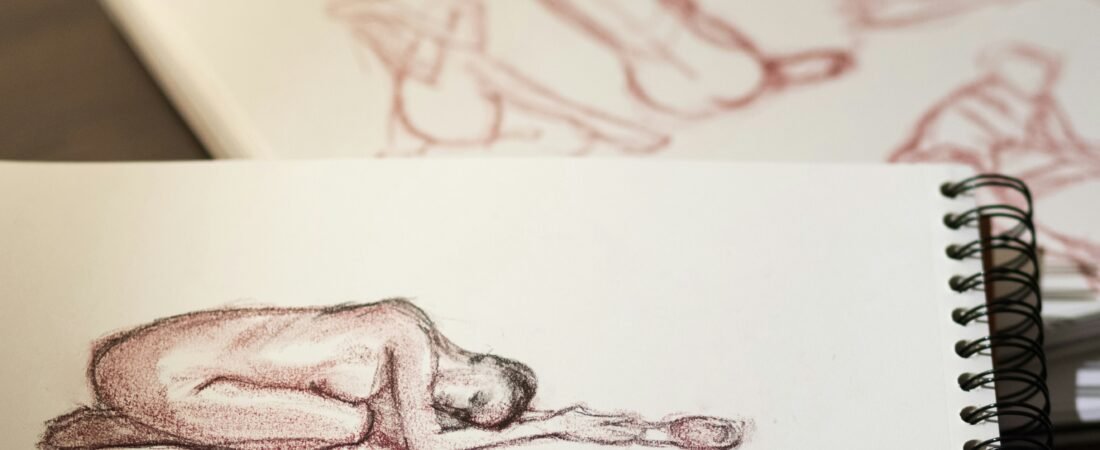
Drawing figure art that feel alive is one of the most rewarding skills an artist can master. Dynamic poses capture energy, personality, and emotion—turning a static figure into a story in motion.
Whether you’re sketching superheroes, dancers, or casual human gestures, learning to draw dynamic poses in figure art requires understanding anatomy, rhythm, and flow.
In this guide, we’ll break down key principles, from gesture drawing to line of action, so you can infuse every pose with believable motion and vitality.
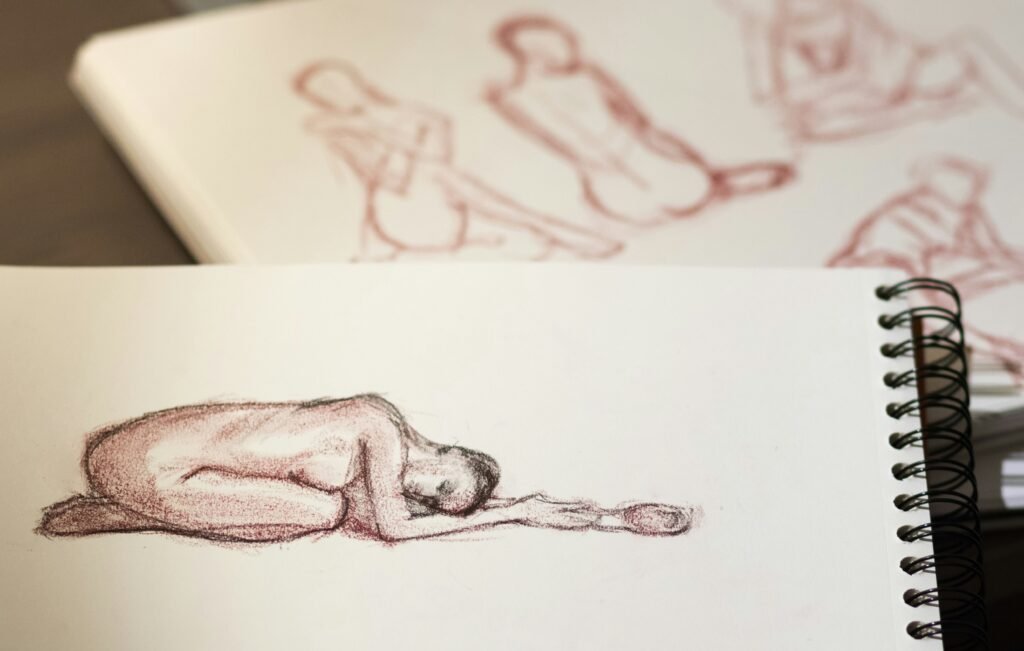
Why Dynamic Poses Matter in Figure Art
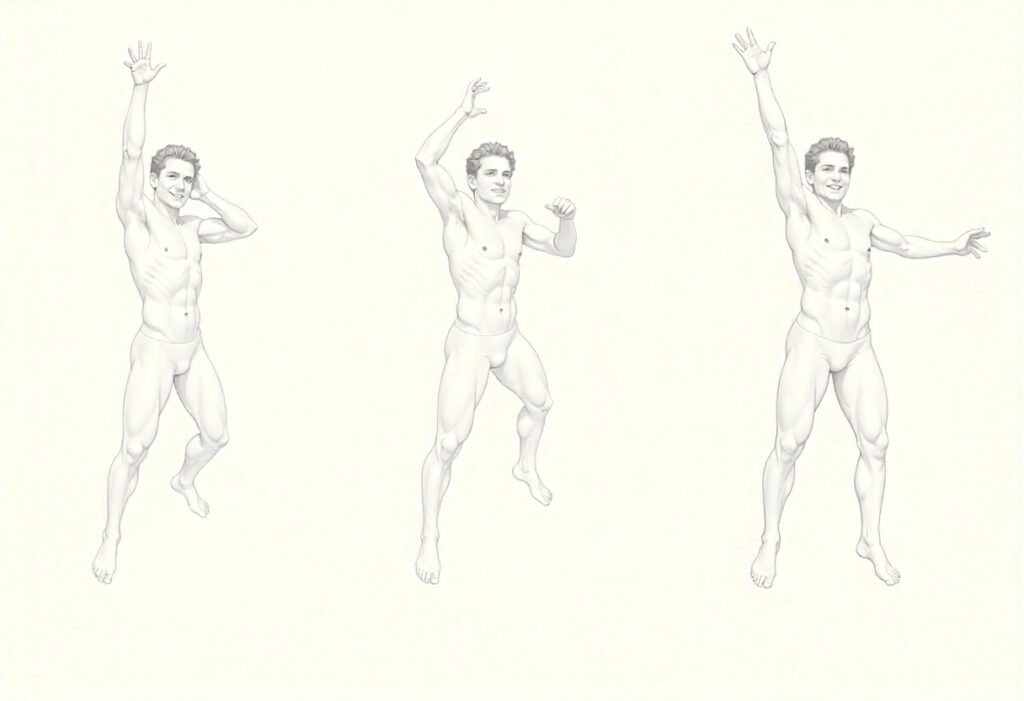
A strong pose communicates more than physical structure—it reveals intention and emotion. Stiff or symmetrical drawings often feel lifeless because they lack the energy that suggests movement.
Dynamic poses figure art help you:
- Tell stories visually. A bent posture or extended arm can express power, fatigue, or grace.
- Develop stronger compositions. Interesting silhouettes make your artwork more engaging.
- Improve anatomy understanding. Movement reveals how muscles stretch and compress naturally.
- Create believable characters. Every pose should support a character’s mood or action.
When your drawings move, your audience feels connected. That’s why mastering dynamic poses is a cornerstone of compelling figure drawing.
For deeper anatomy understanding, check out Mastering Anatomy in Drawing .
Understanding Movement and Flow
Before drawing, think about how the body moves through space. Every motion follows a natural rhythm guided by gravity, balance, and intention.
Professional artists often visualize this as a flow line—a curve that runs through the body to show energy direction. Even subtle gestures have flow.
Imagine your subject walking, leaping, or turning. The movement should feel continuous, not broken into stiff segments. This flow is the foundation of gesture art, where line rhythm matters more than details.
Pro Tip: Try sketching quick 30-second poses to capture motion, not muscle. The goal is to feel the movement before refining anatomy.
Gesture Drawing Basics
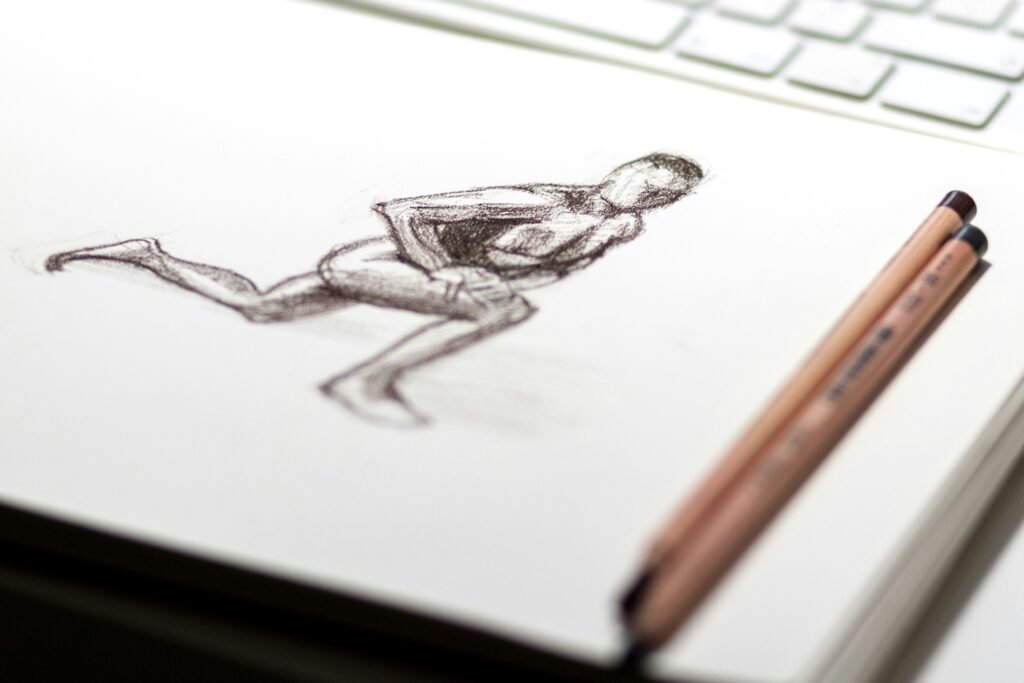
Gesture drawing is the fastest way to understand movement and emotion in art. It trains your eye to focus on the essence of the pose, not the precision of form.
Instead of rendering every contour, think of gesture as capturing energy in a single breath.
Here are two key elements that define strong gesture drawing:
Lines of Action Dynamic Poses Figure Art
The line of action is the central curve that defines the body’s direction and energy. Every powerful pose starts with one.
It could be an S-curve (for elegant or twisting movements) or a C-curve (for straightforward motion). This line determines how limbs and balance follow through.
- S-Curve: Used for dancing, twisting, or relaxed poses.
- C-Curve: Used for running, leaning, or directional actions.
By exaggerating this line slightly, you can make your figure feel more dynamic and expressive.
Learn more from Line of Action, a popular online gesture drawing tool.
Rhythm and Balance Dynamic Poses Figure Art
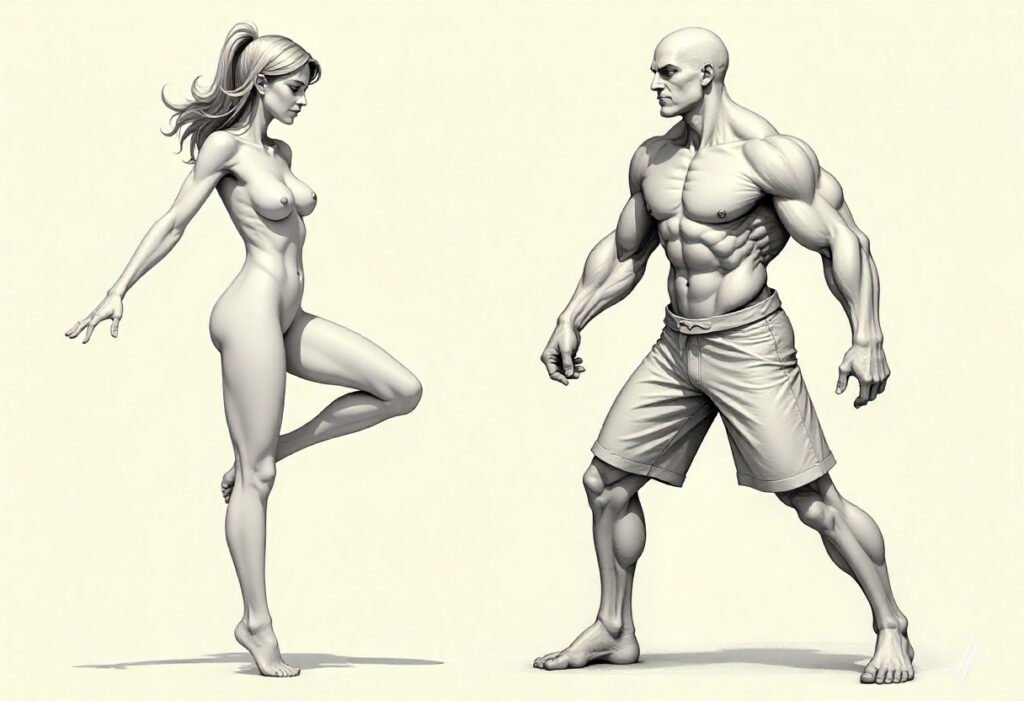
Rhythm connects each part of the body in motion. Good poses have a visual beat—an alternating flow between tension and relaxation.
Balance, on the other hand, keeps the pose believable. Even in exaggerated gestures, the figure must maintain a clear sense of weight distribution.
Tips for improving rhythm and balance:
- Alternate straights and curves for visual variety.
- Keep shoulders and hips opposing each other (contrapposto).
- Anchor weight on one leg or arm to create realistic grounding.
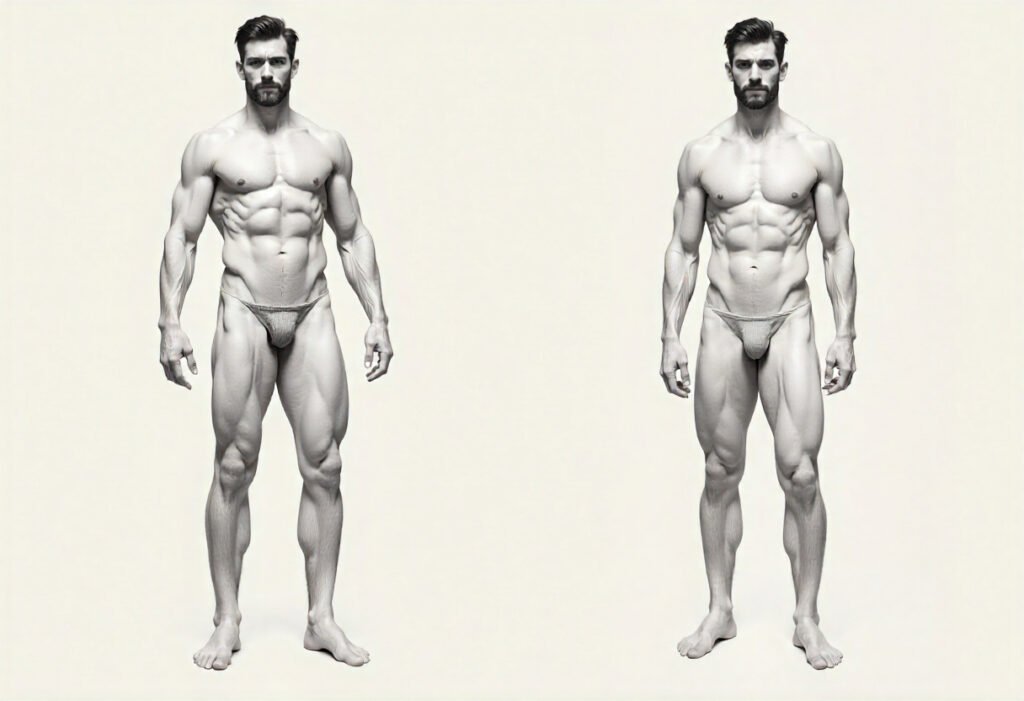
Dynamic poses thrive on asymmetry. When both sides of the body mirror each other perfectly, the figure looks stiff. Break the symmetry for life-like energy.
Try some Creative Exercises to Improve Drawing Skills to loosen up your gesture flow.
Techniques for More Expressive Figure Art Dynamic Poses
Once you’ve mastered gesture, it’s time to refine and add character. Here’s how to elevate your figure drawing from sketch to storytelling:
- Start with action, not structure. Sketch the line of action first, then build anatomy around it.
- Exaggerate for emotion. Push the curve of the spine, tilt the head more, extend a limb farther—controlled exaggeration adds life.
- Use perspective and foreshortening. Angles create depth. Study overlapping shapes to make poses feel three-dimensional.
- Break down movement. Study animations or dance photos frame by frame to see how momentum shifts.
- Simplify the body into shapes. Think of the torso as a box and the pelvis as a bowl—rotate them independently to create natural twists.
For pose libraries and practice references, explore PoseManiacs or professional Art Anatomy Guides.
Common Mistakes and How to Fix Them
Even experienced artists struggle with dynamic poses. Here are frequent issues and how to solve them:
| Mistake | Why It Happens | How to Fix It |
|---|---|---|
| Stiff, straight poses | Overfocus on anatomy instead of flow | Start with gesture; add details later |
| Unbalanced figure | Ignoring weight distribution | Drop a vertical line from the head—should align with the grounded foot |
| Weak silhouettes | Complex outlines | Simplify the figure into readable shapes |
| Flat perspective | Avoiding foreshortening | Practice drawing limbs coming toward the viewer |
| Repetitive poses | Lack of variation | Use random pose generators for fresh angles |
Tools and References for Practice
Building skill in dynamic posing takes consistent observation and study. Here are some tools and exercises to keep improving:
1. Online Pose Tools
- PoseManiacs – 3D anatomical poses with rotation.
- Line of Action – Timed gesture drawing sessions for daily practice.
- QuickPoses – Randomized photo sets for speed sketching.
2. Study Real Movement
Watch sports, dance, or animation clips in slow motion. Try pausing and sketching mid-motion to capture gesture lines.
3. Life Drawing Sessions
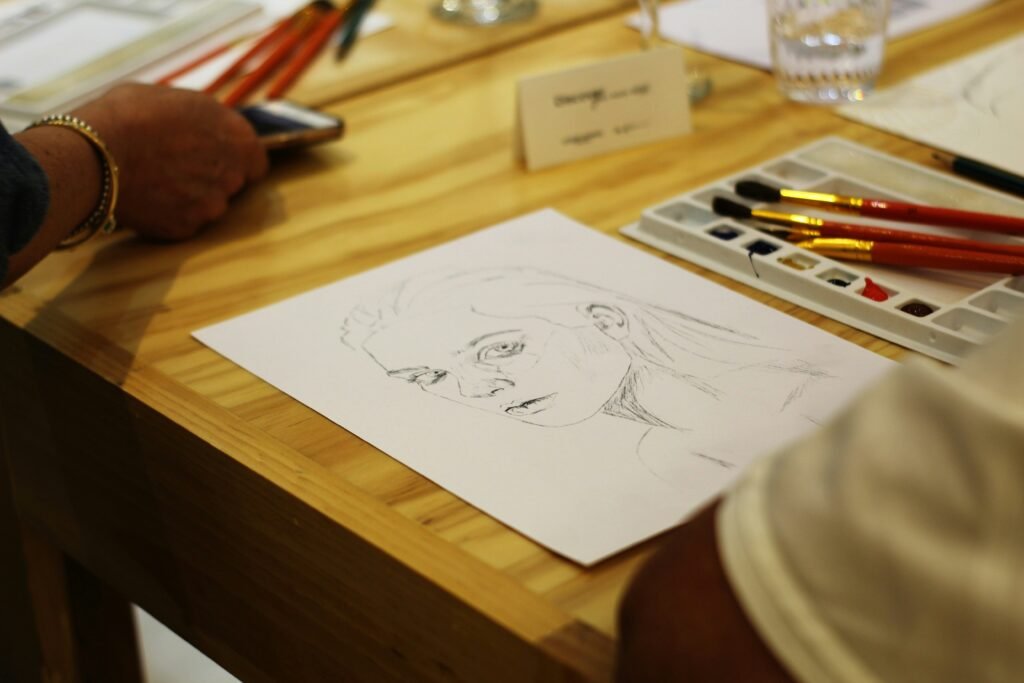
Nothing beats drawing from life. Attend local figure drawing meetups or use online photo sessions.
4. Analyze Master Artists
Study comic artists like Kim Jung Gi or animation frames from Studio Ghibli. Notice how every pose has rhythm and tension.
Pro Practice Tip: Set a daily 10-minute gesture challenge—30-second sketches of live or reference poses. Over time, your figures will become fluid, confident, and expressive.
Conclusion
Dynamic poses transform your drawings from static studies into living characters. By focusing on gesture, rhythm, and anatomy, you can create figures that feel real and full of life.
Remember: it’s not about perfection—it’s about motion. Keep practicing, experiment with exaggeration, and learn from every sketch.
🎨 Try a daily pose challenge for the next 7 days. Share your results or tag @VexazArt on social media to inspire others in their figure drawing journey!