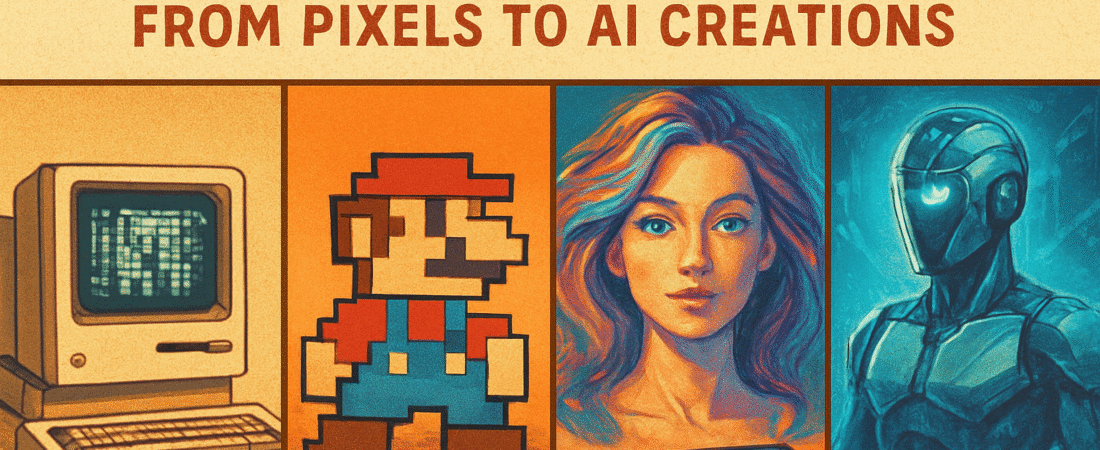
Understanding the Digital Art Revolution
Digital art has transformed the way we see, create, and share visual experiences. What once started as simple pixelated images has now evolved into highly complex, AI-generated masterpieces. This journey from primitive graphics to cutting-edge artificial intelligence reflects not only technological growth but also human creativity’s adaptability. In this article, we’ll explore how digital art evolved over decades, where it stands today, and where it might head in the future.
Early Beginnings of Digital Art
The First Digital Images and Experiments
The roots of digital art trace back to the 1950s and 1960s, when computer scientists and engineers began experimenting with algorithms to create basic visual outputs. These early attempts weren’t meant as “art” in the modern sense but as technical demonstrations of computing power. Yet, pioneers like Frieder Nake and Harold Cohen helped bridge the gap between technology and creativity.
🔗 External Resource: Smithsonian Magazine – The History of Digital Art
The Role of Computer Graphics in the 1960s–1980s
During the 1960s and 1970s, computer graphics advanced rapidly. Universities and research labs produced experimental artworks that looked futuristic at the time. By the 1980s, personal computers made digital drawing and painting accessible to more people. Programs like MacPaint allowed artists to experiment in entirely new ways.
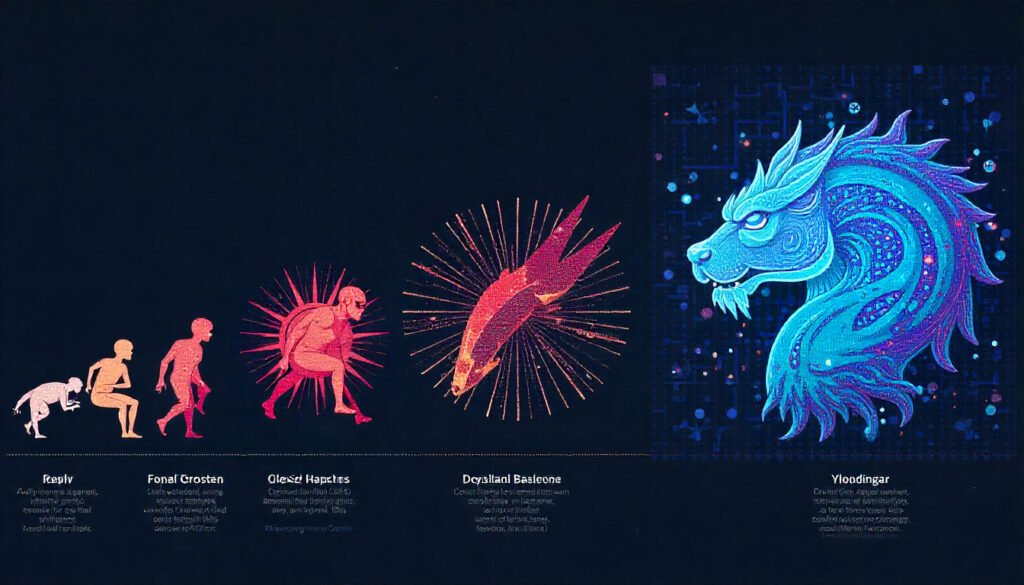
The Rise of Pixel Art
Pixel Art in Video Games and Popular Culture
Pixel art dominated the 1980s and 1990s, particularly in the gaming industry. Iconic characters like Mario, Sonic, and Link were born from pixel limitations, yet their designs shaped pop culture. The charm of pixel art lies in its simplicity and nostalgia, which still influences modern indie game developers today.
Limitations and Artistic Potential of Pixels
While pixels were a limitation of early hardware, artists used them to their advantage. With careful placement of tiny squares, creators could evoke emotion, detail, and storytelling. Even in 2025, pixel art remains a respected style, celebrated for its retro appeal.
Read move : How to Start Drawing for Beginners
Digital Painting and Illustration Software
Photoshop and the Creative Industry
Adobe Photoshop, launched in 1988, revolutionized digital art. It gave creators powerful editing tools, layers, and brushes that allowed limitless possibilities. From photography to digital painting, Photoshop became an industry standard that professional artists still rely on.
The Growth of Digital Drawing Tablets
The introduction of Wacom tablets and later devices like the iPad Pro gave artists precision and fluidity in their work. Stylus technology made digital drawing feel natural, bridging the gap between traditional art and digital innovation.
3D Art and Animation in the Digital Age
CGI in Movies and Gaming
The 1990s saw the explosion of 3D computer graphics. Films like Toy Story and games like Final Fantasy showcased how CGI could immerse audiences in entirely new worlds. 3D modeling software such as Blender, Maya, and 3ds Max became indispensable tools.
Sculpting Tools and Virtual Environments
Digital sculpting tools allowed artists to craft lifelike characters and environments. As VR technology advanced, creators began experimenting with immersive, interactive art spaces where audiences could step inside the artwork itself.
The Internet and the Democratization of Digital Art
Online Communities and Digital Art Platforms
The internet brought a new era of collaboration and sharing. Platforms like DeviantArt, ArtStation, and Behance gave artists global exposure. Suddenly, anyone with internet access could showcase their creations to millions.
The Rise of Social Media Art Influencers
Instagram, TikTok, and YouTube allowed artists to grow audiences without needing galleries or publishers. Social media made digital art mainstream and empowered artists to monetize their work directly through commissions, prints, and collaborations.
NFTs and Blockchain in Digital Art
Digital Ownership and Collectibles
NFTs (non-fungible tokens) changed how we perceive ownership in the digital world. By using blockchain, artists could authenticate their work and sell it as unique collectibles.
The NFT Boom and Its Impact on Artists
The 2021–2022 NFT boom saw millions of dollars poured into digital art sales. While controversial, it created opportunities for digital artists to finally earn recognition and income from their work in unprecedented ways.
Artificial Intelligence and Creative Tools
AI-Powered Art Generators
AI tools like DALL·E, MidJourney, and Stable Diffusion have revolutionized how art is made. With a simple text prompt, users can generate stunning visuals in seconds. This doesn’t replace traditional artists but opens new creative possibilities.
Collaboration Between Human Artists and AI
Many artists now collaborate with AI, treating it as a creative partner. By blending human intuition with AI’s ability to analyze patterns, the results can be both unexpected and innovative.
Read also : Exploring The World of AI Art Generators a New Era of Creativity
Ethical Concerns in AI-Generated Art
Copyright and Authenticity Questions
AI-generated art has raised concerns about intellectual property. Who owns an artwork created by AI? Is it the programmer, the user, or the machine itself? These questions continue to spark debate.
The Debate Over Creativity and Machines
Critics argue that AI lacks true creativity since it relies on pre-existing data. Supporters believe AI expands the definition of creativity, pushing humans to rethink what art really means.
The Future of Digital Art
Virtual Reality and Immersive Experiences
With advancements in VR and AR, digital art is moving into fully immersive spaces. Artists can now design entire worlds where viewers can walk, touch, and interact with creations.
Predictions for the Next Digital Art Movement
The next frontier may lie in AI-augmented creativity, where humans and machines co-create in real time. Digital art will likely become more interactive, multisensory, and deeply personalized.
FAQs about the Evolution of Digital Art
Q1. When did digital art first begin?
Digital art began in the 1950s–1960s with experimental computer-generated visuals.
Q2. What is pixel art, and why is it important?
Pixel art is a style created from small square pixels, widely used in early video games and still popular today.
Q3. How has AI changed digital art?
AI enables instant artwork generation, expands creative possibilities, and challenges our understanding of originality.
Q4. Are NFTs still relevant for digital artists?
Yes, NFTs remain an option for artists seeking digital ownership, though the hype has cooled since 2021.
Q5. What tools do digital artists use today?
Popular tools include Photoshop, Procreate, Blender, and AI art generators like MidJourney and DALL·E.
Q6. What’s the future of digital art?
Expect more immersive, interactive experiences with AI, VR, and AR shaping the next generation of art.
Where Pixels Meet AI Creativity
From the humble beginnings of pixelated screens to the limitless potential of AI-driven creations, digital art has always reflected human innovation. It stands as a bridge between technology and imagination, proving that art will continue evolving as long as humans dare to push boundaries. The story of digital art is far from over—it’s only just beginning.
🔗 External Resource: Smithsonian Magazine – The History of Digital Art